10 years of indie dev: How I went global from Japan (talk w/ Hiroshi) - Part 1/2

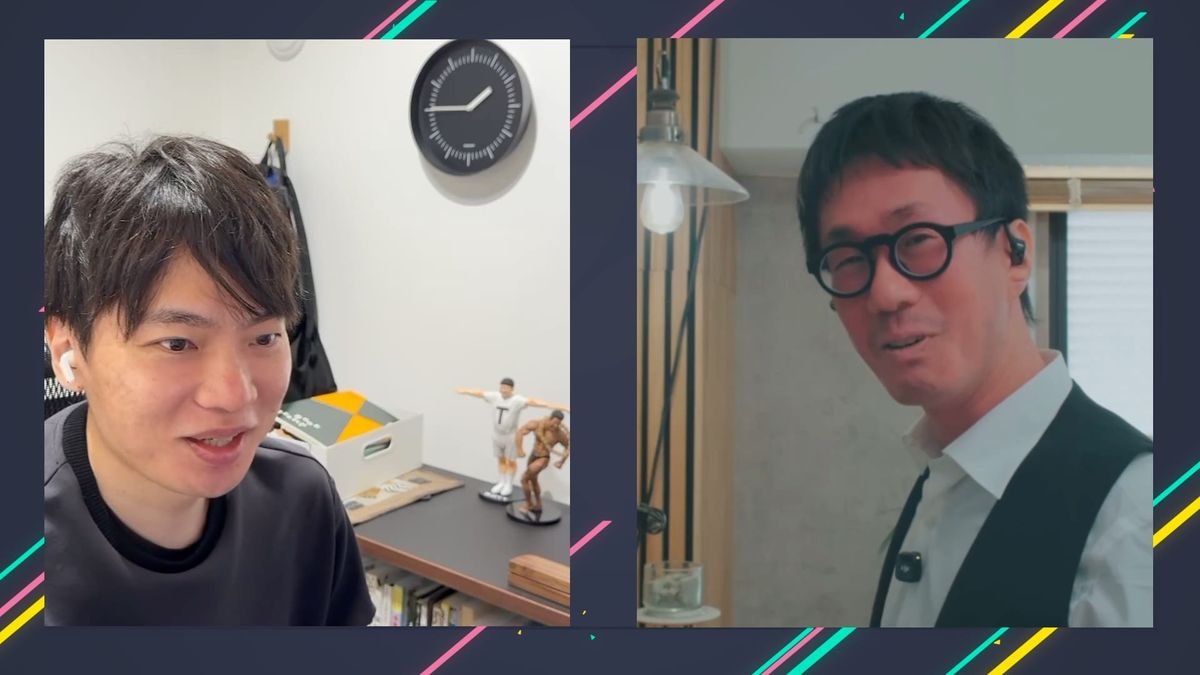
I joined Hiroshi's podcast episode a few weeks ago. We shared our experience and knowledge on indie dev. I'd like to cross-post our talk in English here. I also tried to create an English dub using AI. The voice cloning quality is quite impressive, so I hope you enjoy it.
00:00 I joined Hiroshi's podcast
01:12 Intro & welcome Takuya from Inkdrop
02:31 Takuya's background: from Walknote to Inkdrop
06:07 Going indie: cautious vs. reckless paths
08:06 How indie dev became a freelance pipeline
10:36 Timeline to making a living from Inkdrop
13:28 Why target the English market from day one
15:30 Pre-AI struggles writing English copy
17:31 Thoughts on the AI vibe-coding era
18:37 Reviewing every line: AI usage philosophy
22:19 The Shinkansen analogy for AI
27:05 Why personal taste matters more than ever
28:19 Living better in the AI era (Ichiju-Issai)
30:18 Enjoying tech change like the seasons
32:11 Avoiding the herd & staying unique
36:27 Dealing with online critics
37:46 Wrap-up
Intro
Hiroshi: Hi, hello, good evening. I'm Hiroshi Creation, an indie app developer. Today we have another special guest with us: Takuya from Inkdrop. Thanks for joining us.
Takuya: Thanks for having me. I heard you quit your day job, Hiroshi, so I figured I had to come show some support.
Hiroshi: Thank you. Our connection goes back a while, right? I think the first time was about 5 years ago when I wrote a guest post on your blog.
Takuya: Way before that, actually — we'd been following each other and watching each other's work. Back then your app was called "Family TODO," and now it's "minto." You'd been building it for a long time, and when it hit 10,000 users, that's when I invited you to write something on the blog. That's how it started — me reaching out to you.
Hiroshi: Ah, that's right. Most indie devs probably already know you, but for now, Takuya, could you give a quick self-introduction?
Takuya's background: from Walknote to Inkdrop
Takuya: Sure. I'm Takuya. I make a Markdown-focused note-taking app called Inkdrop — I've been working on it for about 10 years now. Originally I joined Yahoo as a new grad, quit after a year and a half. While working there I was always doing indie dev on the side, and what I built then was a music app called Walknote, for iOS — well, iPhone OS at the time. It got picked up and went viral. On that momentum I quit my job, like "I'm gonna live off my dream apps," and just jumped without thinking. In the end, monetization for Walknote totally failed, but it gathered around 130,000 users.
Hiroshi: Wow.
Takuya: It made it into the top rankings, things were going well, but I hadn't thought through monetization at all, so it didn't pan out. I gave up on it, then made a bunch of other things that all failed, and finally I thought "I want a better note-taking app, let me just build one." That became Inkdrop.
Hiroshi: Oh, I see.
Takuya: Until then I'd had tons of failures — it's not like I built Inkdrop out of nowhere and it just worked.
Hiroshi: Right, that's the thing. People only see the bright side — the apps that actually succeed — but you'd built quite a lot before that, huh?
Takuya: In terms of indie dev, it goes back to high school, even middle school. I've been doing personal projects basically since I started programming, so my programming history equals my indie dev history.
Hiroshi: Wow, you're a real veteran. In minto-years, how old is Inkdrop now? More than 10?
Takuya: Exactly 10 — this year is the anniversary. Thanks to everyone, it's still going.
Hiroshi: I'd love to talk with a veteran like you about all kinds of things today. minto, by the way — in about a month it'll hit year 7, the 7th anniversary. Seven years is actually a lot, when I think about it.
Takuya: Yeah, 7 years is long.
Going indie: cautious vs. reckless
Hiroshi: But in my case I went independent really late — for about 6 and a half years I was doing it as a side gig while working a day job. So my pace has been like a turtle's, honestly.
Takuya: Was that about balancing monetization and being able to cover living expenses? What was the deciding factor for taking the leap?
Hiroshi: Well, some people borrow money from places like the JFC and just dive in — Takuya, you might've been like that at first too. But in my case I was very cautious, like crossing a stone bridge by tapping it first. I waited until revenue was solid before going independent. Because of that, it ended up taking 6 and a half years.
Takuya: I think that's totally fine. In my case, I really wasn't thinking — pure youthful recklessness. After I quit, friends literally called me asking "Are you okay?" So I really wouldn't recommend it. But the reason I survived was that Walknote had become a track record, and that mattered a lot. Back then the iPhone market was super hot, Facebook was on fire — everyone wanted to be the next Mark Zuckerberg, that was the vibe. So in that environment, word got around that "this guy can build high-quality iPhone apps." Through friends introducing me, I got work from startups I knew, and even bigger companies started giving me design work. So indie dev itself led directly to my freelance work. Even though it wasn't direct monetization, indie dev as a means of making money came through huge for me.
Hiroshi: Right, back then there weren't many people who could build iPhone apps either. You probably had people asking "How do you even do this?" — that kind of thing.
Takuya: Yeah, exactly. If you build something, it leads to work, so you don't have to worry about starving. You don't have to obsess over making it work financially as just an app.
Hiroshi: Yeah, exactly. It's not 0 or 1 — if your indie app doesn't sell, you can take freelance contracts, or honestly just go back to being employed and work as a salaried engineer. When you think about it that way, the risk isn't really that big. You've got the skills, that's enough. minto already serves as a business card too. Even in the worst case where I can't make a living off it, everyone already knows "this guy can build stuff like this," so work would just keep coming in.
Takuya: Yeah, and beyond just the technical side — having actually shipped a personal app means your marketing instincts aren't off compared to the average person. Plus, both you and I do our own design. Being a frontend engineer with some design sense — you don't need to explain it in a job interview. Just say "I made this" and they get it instantly. I've never explained it. I've never said "I have X years of PHP, X years of JS." I just say "I can build this app," show them, and the work comes in pretty easily. They go "Oh really? Actually we've been thinking about something like this," and the conversation moves forward fast.
Timeline to making a living from Inkdrop
Hiroshi: When was it — you wrote about it on the blog.
Takuya: For the first year after release I couldn't make a living off it at all. Around year 2, I wrote a blog post like "I can now cover half my rent, my full rent." So by year 3 I think I was fully able to support myself.
Hiroshi: From there it was just Inkdrop full-time?
Takuya: Pretty much. I basically don't take contracts anymore. Just one time — there was this Austrian React Native developer friend of mine, Marc Rousavy, who runs an agency. He needed designer work and asked me. I told him "Sure, as long as I can use it as content for my videos," and he said OK. So I turned it into YouTube content while doing the work — that was the last contract I took.
Hiroshi: Got it. So basically just Inkdrop now.
Takuya: My stance is, if something really interesting comes along I'll do it without being too rigid. That one was great because it was my first time taking work from an Austrian company — first time doing overseas contract work — and the fact I could turn it into video content was interesting too, plus it paid. All three things lined up.
YouTube channels and going global
Hiroshi: That reminds me — about your videos. Your YouTube channel has crossed 200K subscribers now, right? That's pretty incredible.
Takuya: I have two channels. DevAsLife is the main one with 210K, and the other one is talk-focused — I started it for English speaking practice — that one's at about 20K now.
Hiroshi: Whoa. So you have the Silver Play Button too?
Takuya: Yeah, I have it. Lately I've been posting more on the second channel (craftzdog), the talk-focused one, than on DevAsLife.
Hiroshi: I think that's because you're constantly publishing in English, and Inkdrop is also primarily in English. Rather than focusing on Japan, your whole activity has gone beyond Japan and into the global market. My recent theme has been about earning foreign currency from a cheap Japan. But you've been doing this from a really early stage — about 10 years ago. Why did you choose to market to overseas audiences?
Takuya: Because there was no reason to limit it to Japan, from the start. It's a note-taking app — why would I only sell it in Japan? That was the first question. Through development I'd been contributing to open source a lot, so "overseas" was already very close to my daily life.
Hiroshi: I see.
Takuya: I was filing issues, sending PRs, doing all that in English daily. Overseas developers were already in my circle. So when I conceived Inkdrop, since it's for developers, my target was naturally the developers around me — which means English-speaking people. If those were my target, not doing it in English wasn't an option.
Of course, it's clear that Japan's economy will shrink over the next 10 to 20 years — but rather than keeping that in mind, basically when thinking about what I want to sell, I think about what kind of thing I'd buy. And then I think about who I want to sell to. That's someone close to me — someone similar to me, someone I can easily understand. That's the English-speaking developers around me. Following that line of thought, building it in English just made sense.
Hiroshi: Got it, so it was natural. Rather than deliberately deciding to push hard into the English market, it was part of the open source flow — going overseas was the natural path.
Takuya: Yeah. Of course my English was terrible at the time, so writing one blog post would take 2 weeks. To make a website I'd visit all kinds of sites, copy-paste phrases, mash them together. Coming up with copy in English was insanely hard. I could only do literal translation, and translation tools didn't really give good results either. So I'd visit the homepages of all the apps I was using, pick out "this phrase works, this one was useful," collect them, and stitch them together. Nostalgic.
Hiroshi: Wow, that's amazing. Whereas now, if you want to make an overseas site or sell a service abroad, you just translate with AI and you're done — that's how easy it feels, putting quality aside.
Thoughts on the AI vibe-coding era
Hiroshi: So my impression of you, Takuya — even before AI you were heavily into indie dev, and among indie devs you have really high technical skill. You've contributed to open source from way back, you can do Electron performance tuning and app optimization. So I'd love to ask how you're feeling about this AI vibe-coding era right now.
Takuya: It's super fun. I've been writing about this in recent blog posts too — AI is so pervasive that avoiding it is impossible. Honestly, in terms of skill, the AI is already beyond a new grad.
But in terms of how I use it — it's polarized maybe. There's the extreme type who just lets AI do everything and doesn't even read the code AI wrote, and on the other side the type who only uses AI as chat. I feel the graph kind of looks like that, and I'm sitting in the middle. The code AI writes, I basically read line by line, review it, and only commit once I'm satisfied — that's how I use it.
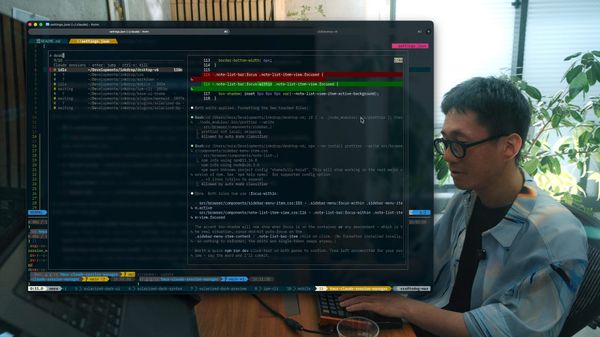
Because there are paying users already on the product, I can't just drop in irresponsible code. To ship something I'm ultimately responsible for, I have to review every single line. So firing up 10 or 20 agents and producing tons of stuff at insane speed — that's not how I'm using it right now. I always look at things one at a time.
Hiroshi: Yeah, I get it. I've been making something new lately, and since the new thing has no users, I can make breaking changes freely. But when I'm working on minto, there's already thousands, like 10,000 lines of code that humans wrote — that I wrote — and there are existing users. So I really can't cut corners line by line. But for the new project, I'm letting AI do about 90% of it. I do review it, but it's pretty much half-self-driving — like 70% autopilot.
Takuya: That feeling of "I can't fully trust AI yet" when you've already written an existing service by hand and it has users — I totally get it. When you're starting something completely from scratch with AI involved, the cost of writing is basically zero, so you can make breaking changes without hesitation. Like if you're making a new web page, a landing page — at that moment I'd definitely use AI, but in the trial-and-error process I'd be tossing out the code I just wrote. Just spinning the PDCA loop at insane speed, getting closer to the shape little by little.
This is similar to image generation. When you make a website with AI, you let it build the whole thing each time, then "I don't like this part, regenerate, regenerate" — it's really similar to image generation, that mental image.
Hiroshi: Before, only one-man-band CEOs with crazy clients could work that way. But now individuals can do it — that's the change. Whether it's a good way of working, nobody really knows yet.
The Shinkansen analogy for AI
Takuya: In the end, if you actually want to pay attention to the fine details, that approach has limits. I wrote about this on the blog before — there's an analogy that AI is like the Shinkansen. Basically, you can get from Osaka to Tokyo at incredible speed, but if you specifically want to go to Asakusa, or back to Hikarigaoka Park where you used to live, you have to switch to local trains, take a taxi, take a bus — these fine-grained mode switches become necessary.
So if you want to go somewhere specific, do something specific, when filling in that level of detail, leaving it to AI has limits. When you ride from Osaka to Tokyo, the scenery flies by at incredible speed, so the entire process becomes invisible. I think that's why your head feels foggy when you use it.
Hiroshi: Ah.
Takuya: "Actually we've arrived in Tokyo, we're at Shinagawa." From there, when you start figuring out how to get further, suddenly the scenery becomes visible — "Oh, a new building has gone up here." You can notice changes like that. The way I'm using AI in Inkdrop right now is probably more like taking a bus, taking a taxi, or noticing which buildings have been rebuilt — that kind of usage where you can see the world.
Hiroshi: So basically, first you ride the Shinkansen, fly around, try lots of places, going "ah, this design style doesn't fit," like German style, Austrian style, and so on. You travel around like that, and once something clicks, from there specifically — "this specific architectural style, this window feel, reproduce this" — you start giving instructions at that level of specificity.
Takuya: Yeah, exactly. That foggy-head feeling, I really get it. You can't read it anymore, the speed is too fast for humans to keep up. You lose the will to read it, it's too fast.
Hiroshi: So as instructions, like "change the shape of this clock here a little, change the color" — at that unit of instruction, the way you're probably doing it, Takuya — when you instruct AI like that, you can look at each line and say "this color is bad." But broadly, if you give vague instructions before you even have an image of the world you want to realize, it's really unbearable to watch.
Takuya: Recently I tried this front-end set — for website design, someone analyzed landing pages of various famous companies and turned them into Markdown. It was called design.md — or maybe Awesome DESIGN.md, that's the one. I just sent the link, you can see it in the chat.
I tried it once, testing different site styles one by one on my own website, but the quality wasn't good enough to use as-is, unfortunately. The frame structure — page structure, layout, color palette — that's the only level it replicates. It doesn't blend things nicely with my app's concept. I thought "yeah, this isn't quite it."
Why personal taste matters more than ever
Hiroshi: That sense of "something's off," your authorial voice, the worldview that's uniquely you, Takuya — it shows in Inkdrop, in your daily blog, in your illustrations. I feel like that kind of sensibility is really important in the AI era. Otherwise you can't make the call, because without a refined sensibility, you can't judge whether a design is good, or whether it's missing something. If you just hand yourself over to whatever AI outputs, you end up with similar designs and apps.
So in the process of refining that sensibility, what have you been doing lately, outside of AI — outside of the computer? Anything you've been doing?
Living better in the AI era: Ichiju-Issai
Takuya: Just yesterday I posted a Vlog and a blog post on exactly this topic — discussing how to live better in the AI era. The inspiration came from Yoshiharu Doi's Ichiju-Issai — the one-soup-one-side concept.
When you're constantly online, you get steeped in algorithms. Open Twitter, X, and you're flooded with drama and gossip, your attention gets pulled in. To use a food analogy, those things are additives — you can live without them. So you keep subtracting that kind of thing, leaving only what's necessary, and maintain the rhythm of your life. That's one.
The second is treasuring organic connections and ideas. Random ones — like a barista at the cafe you frequent striking up a conversation, that kind of small warm moment — or chats with the moms you see every morning, or playing a bit with kids you often see at the park. That kind of connection that wasn't designed by anyone — treasuring that.
As for ideas, instead of staring down at the screen in front of your computer, set it aside, go for a walk, go camping, drive somewhere — make time to step away — and then suddenly good ideas pop up.
Hiroshi: Yeah, yeah.
Takuya: And then — how do I put it — enjoy technological change like the changing seasons.
Hiroshi: Ooh.
Takuya: Every day there's some new AI thing, this AI, that-and-that-agent — keeping up with all of it is exhausting. Instead of living each day competing, racing against someone, you know — "spring is here, the cherry blossoms are beautiful," "apples are in season, let's eat some," "I love saury, looking forward to autumn" — that kind of thing. Not chasing, but appreciating what comes — the things each season brings — appreciating, enjoying, gratefully receiving — that attitude when engaging with technology. The tension drops, and you take in only what's needed, when needed.
Take it in, internalize it, let it ferment — I think that's good for keeping your own pace. Not just chasing trends, but more naturally — when the chance to engage comes through those organic connections, then it's fine to take it in. If you live at that pace, I think unique ideas emerge on their own.
Avoiding the herd & staying unique
Hiroshi: Yeah, exactly — it's like being in the herd, no uniqueness emerges, as long as you're chasing trends. You're just imitating what others are already doing, so there's no element for uniqueness to emerge. So you have to do something different from others — otherwise you won't think of new video formats, won't write articles with unique perspectives.
Publishing in English about how to live in the AI era based on Ichiju-Issai — nobody else is doing that, so at minimum that's unique, I'd say. I read your blog yesterday, and I thought there's no way miso soup or anything could connect to AI, but it really did connect. And I learned for the first time that Doi-san's book was that deep.
Takuya: Yeah, exactly — it's not just recipes or that kind of suggestion, it traces all the way back to deep Japanese roots. It's a really profound book.
So miso isn't an additive — it's something originally aged or fermented. Things with that kind of depth, versus additives like trends or X posts — it's better to think about them separately. You don't have to completely eliminate them — no need to forcibly remove them — but having something inside you that you don't get tired of even eating every day, like miso or rice, that becomes your axis and stabilizes you. It could be playing guitar every day, or drumming — in my case, when I drum, somehow I can return to my original self. That kind of thing seems to have no connection to indie dev at all, but I think it's actually really important.
Hiroshi: Hmm, yeah.
Takuya: The tech world is pretty closed, right? There are a lot of similar-type people. When that happens I can never quite fit in, can't really get into that circle. Ever since school, I've had a personality where joining a fixed group makes me anxious for some reason. Same in tech circles, same in English-speaking circles — when I hang out with the same people too long, suddenly I come back to myself, "wait, is this okay for me?" — and I can never stay rooted. It's just my nature.
Hiroshi: Right.
Takuya: I think that's fine. The flip side is loneliness follows me forever, but not staying with the same homogeneous group — I think that's one of the elements that makes me unique.
Hiroshi: That's so important. The previous guest, Ko-san, was saying the same thing — basically, doing the same thing as everyone else doesn't get you anywhere. Sometimes intentionally going to a different community — Ko-san was talking about that too. So interesting. Love that kind of person.
Dealing with online critics
Hiroshi: I saw your post recently — even overseas, when you post on DevAsLife or your sub-channel, you get comments like "Why aren't you using OpenCode?" Even though using Claude Code or any AI agent at all already puts you in the top 0.something percent. And within that, people compete and try to one-up each other over 0.000-something percent — flexing on each other. I found it interesting that this kind of thing happens overseas too.
Takuya: Tons of it. The people who say that are mostly anonymous accounts, people without confidence in themselves. They use VSCode and want the validation of "VSCode is fine" — so they attack non-VSCode users to convince themselves. So you can ignore them all, it's fine. Just a bit annoying.
Hiroshi: I see. I thought it's like a village — being stuck in a village forever, you can't let yourself get swayed by those words.
Takuya: You don't need to deny others — to validate what you're doing, the question of "what to belong to" is beside the point. Those people should first build up their own self-affirmation.
Wrap-up
Hiroshi: Thank you. So let's pause here for now, and make the second half about the topics you, Takuya, want to talk about.
Takuya: Sure, thank you. Let's wrap up here for now. Thanks so much.
Hiroshi: See you.