Conviction: What 1.5 years and one burnout taught me about coding with AI agents

Disclaimer: I used AI to correct my broken English
TL;DR
- What I learned through a 1.5-year journey of developing a new version of my app, including a 3-month burnout.
- AI should always be secondary in your life. You can't go back to the past.
- Looking back five years from now, whether Fable did this or that will be totally irrelevant.
- Single-tasking still matters a lot. The number of agents doesn't.
- Context switching in your head is the next bottleneck.
- Understanding is what lets you come up with your next ideas.
- Know what truly makes you happy – I build things that I want.
- Running a SaaS for over 10 years is like being a manga artist who's been drawing the same title for years (like Eiichiro Oda with ONE PIECE)
- You are the only one who can build your own conviction.
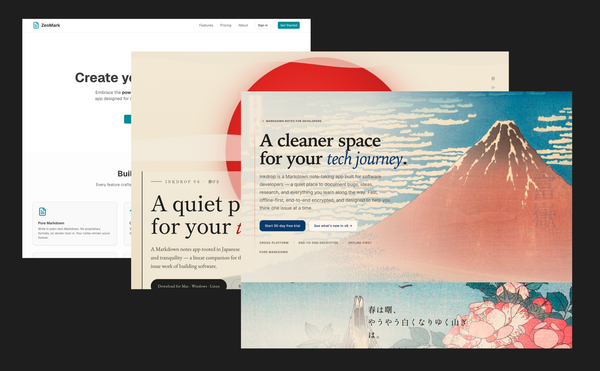
Inkdrop v6 is finally out
Hi folks, it's Takuya here. First, let me announce Inkdrop v6, the new version of my Markdown note-taking app. The website has been fully rebuilt for this release,
and it now includes a live demo you can try without signing up or downloading the app. Please check it out:

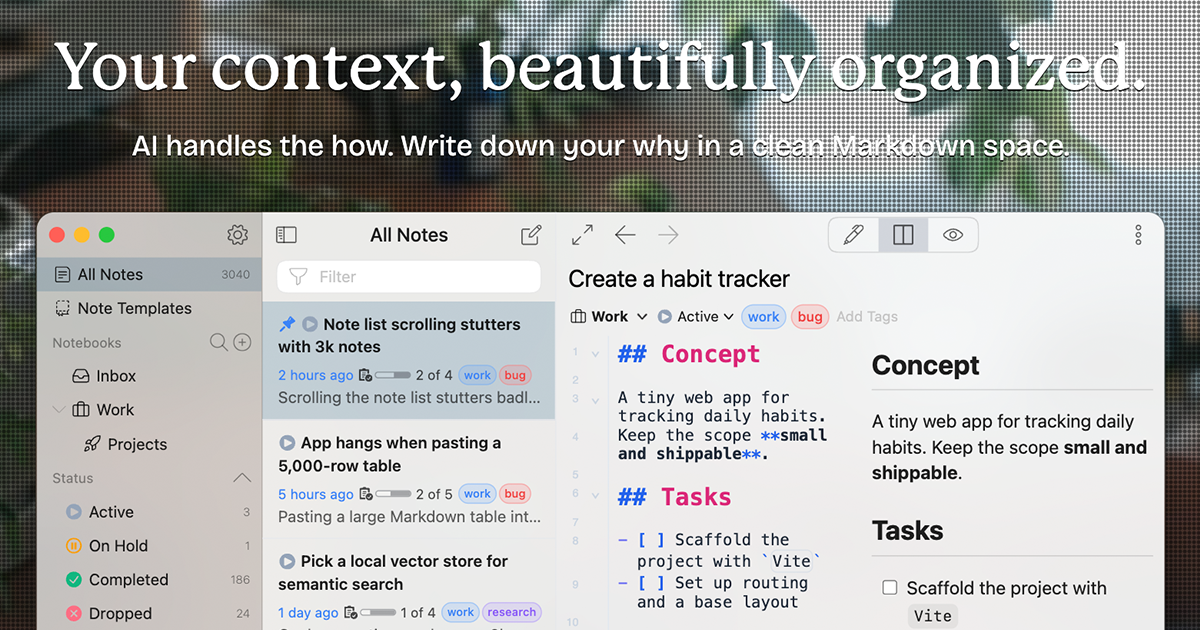
It took 1.5 years to finish, including a 3-month burnout. I'd like to say thank you to the existing customers who patiently waited during development, and to everyone who gave me feedback during canary testing. Check out the release notes to learn what's new in v6.
In this article, instead of pitching my app, I'd like to share the important things I learned along the way.
AI should always be secondary in your life. You can't go back to the past
Last year (2025), I experienced burnout and couldn't do anything for about three months. I shared why it happened and my plan to prevent it from happening again.
It was especially hard because I couldn't spend quality time with my 4yo daughter — and that time is gone forever. My memories of last summer with my family are a total void. I can't regret it enough. Sad.
While I was doing nothing but breathing, the programming paradigm shifted dramatically due to AI. So when I came back from the break, I learned how to use Claude Code and found it fun. But I also realized this AI paradigm shift is so addictive that it makes you forget time and what truly matters in your life.
The regret of missing something important drags on for a lifetime. It's seriously painful, trust me. So if you're ever torn between the excitement of the AI revolution and your kids, choose the kids. Think about it:

Looking back five years from now, whether Fable did this or that will be totally irrelevant. The memories of my second kid starting to crawl, or of helping my older kid practice hiragana – those are priceless.
The lessons from those three months are ones I'll never forget for the rest of my life. Your agents will never care about your life. They'll never say, "Hey, you work too hard! Take a rest."
Single-tasking still matters a lot. The number of agents doesn't
Swarming multiple coding agents feels like a superpower. Suddenly you're completing multiple tasks at the same time, at ultra-speed. That's why I wrote manpower is no longer the bottleneck and tech debt is not a big problem anymore in this article.
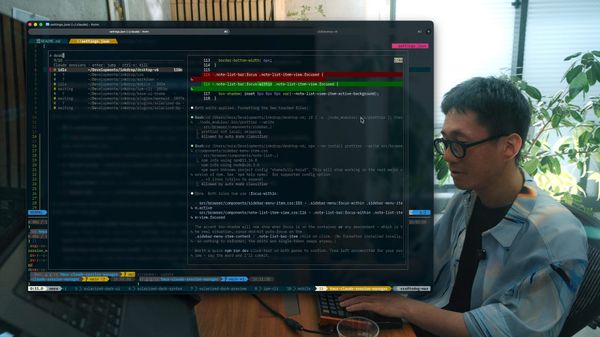
To fully leverage the agentic workflow, I even built a tool to manage Claude Code sessions in tmux:
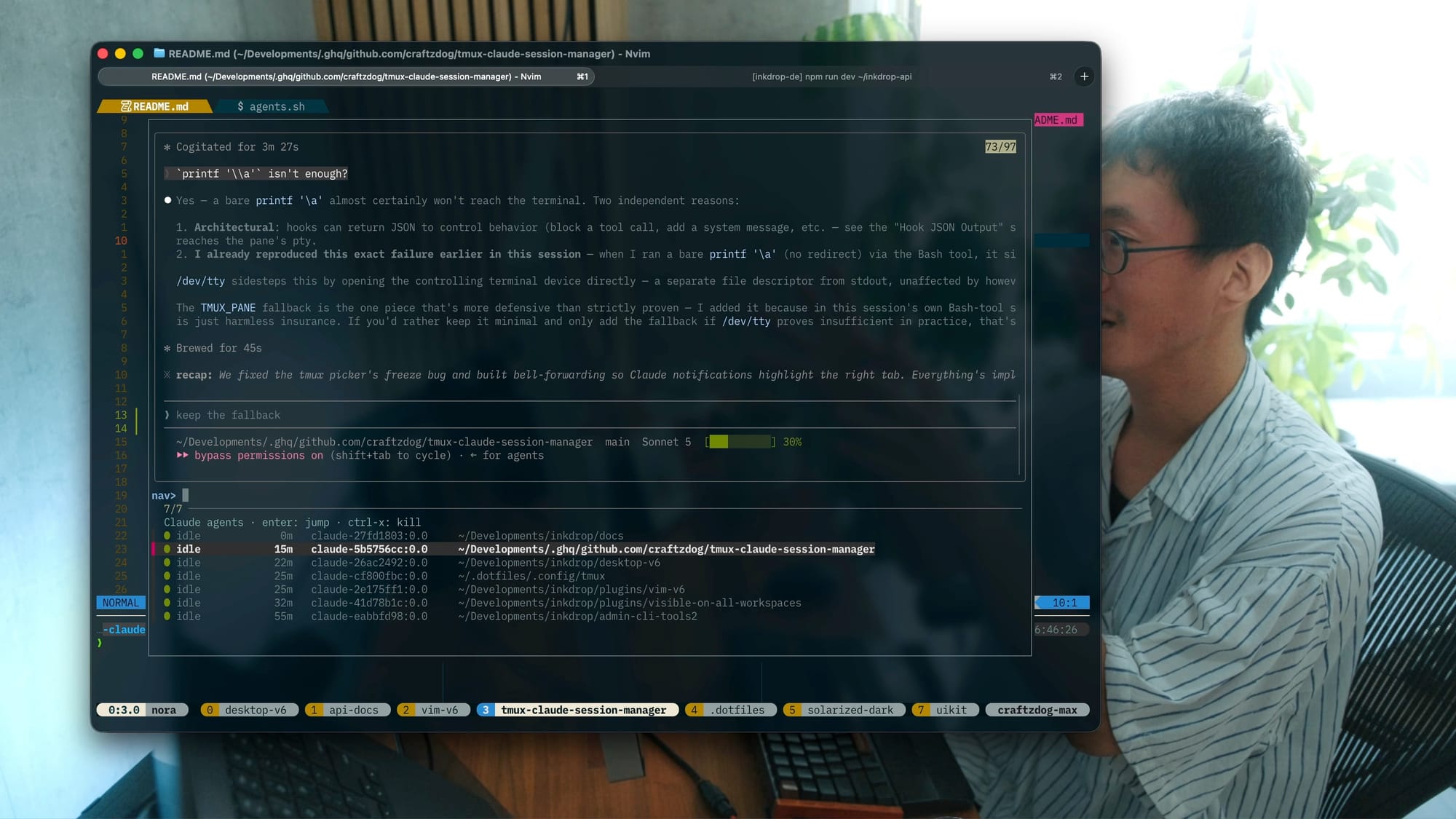
I was happy with it at first. However, I realized that the more agents I ran, the more I lost focus. I often couldn't remember what I'd been doing when I switched tmux windows to check the generated outputs. Tons of session managers are emerging these days, and they're gaining popularity. I wonder how many people can actually use them without suffering from context switching.
Some people say the real problem now is cognitive debt instead of technical debt and that understanding is the new bottleneck.
I also love how Nolan Lawson, the PouchDB author, thinks about AI coding: Using AI to write better code more slowly.
So I decided to run at most one agent for a complex task, plus one or two more for small tasks. I now ask agents to write a detailed plan and report for every task, and I try to understand them as carefully as possible (using note templates via the MCP server). AI tends to develop tunnel vision when it gets stuck. If I understand the task and the problem well, I can come up with better options and suggest them. This workflow significantly reduced my cognitive debt and context-switching problems. And understanding is what lets you come up with your next ideas.
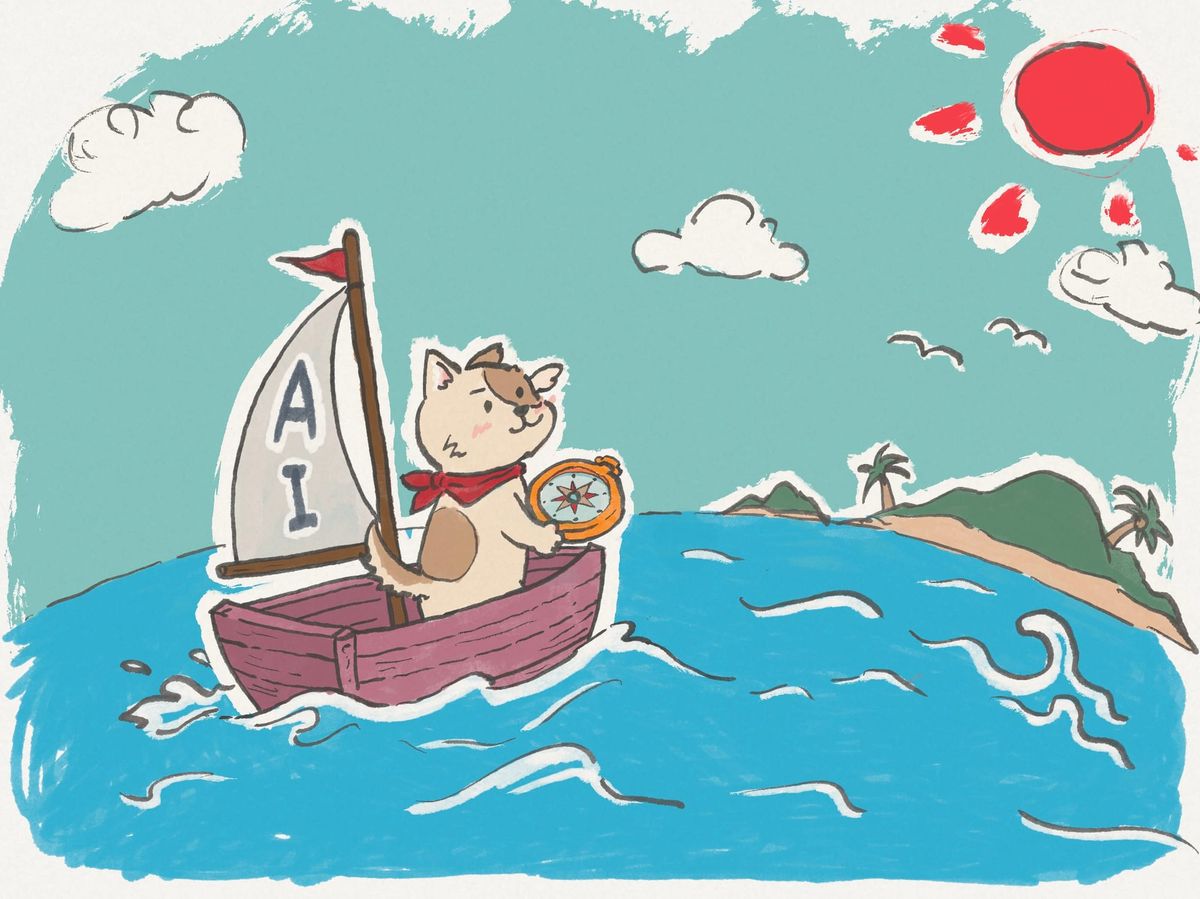
Those who are in love with practice without knowledge are like the sailor who gets into a ship without rudder or compass and who never can be certain whether he is going.
– Leonardo da Vinci, The Notebooks of Leonardo da Vinci
Multitasking with agents makes it easy to lose your rudder and compass.
Don't give up on understanding where your ship is going!
Know what truly makes you happy – I build things that I want
Inkdrop is 10 years old now. Time flies! When I was 30, I never imagined I'd keep running the same project for this long. It's like being a manga artist who's been drawing the same title for years (like Eiichiro Oda with ONE PIECE). Building a note-taking app is super hard, and it will never get easy.
So how have I managed to keep it going for over 10 years? Because I've been building it to make myself happy. That's the most stable source of motivation for me. As long as I'm the biggest user of my own app, I can work on it almost indefinitely.
I've tried to connect my interests to every part of the work, including marketing. I write articles that I would want to read. I publish videos that I would want to watch.
So my creations are basically for people who:
- are similar to me
- are in the same boat
- have similar preferences
- have similar taste
I strongly believe this principle won't change, even in the AI era. Everyone can build apps now. But make sure you know what truly keeps you motivated, whenever and whatever you work on.
AI only lends you intelligence, not conviction
Again, AI doesn't care about you. It just generates output based on patterns. You are the only one who can build your own conviction. Keep in mind that you are the rudder and the compass. And know what truly makes you happy through creation.
That's it. Thanks for reading. I hope you found it helpful on your dev journey and your career as a developer. I'll keep sharing what I learn here.